Planning an Immunostaining Reagent Workflow
Plan an immunostaining reagent workflow by mapping sample context, primary reagents, detection chemistry, controls, compatibility questions, and documentation boundaries.
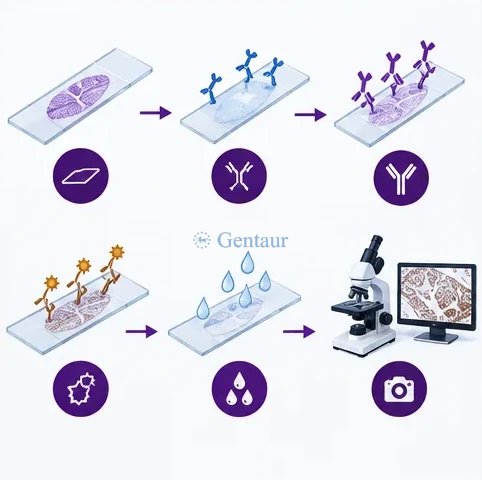
Planning an Immunostaining Reagent Workflow
Research workflow guide
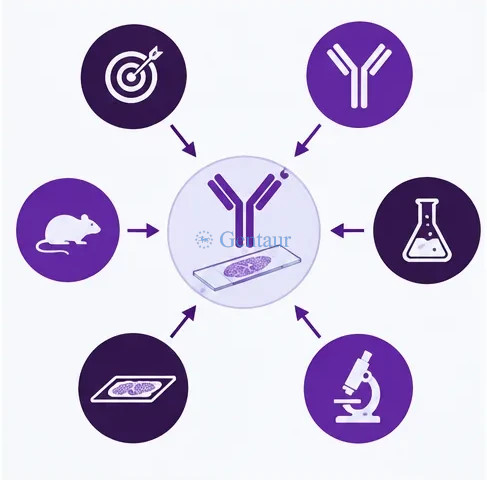
Planning an Immunostaining Reagent Workflow
Map sample preparation, primary reagents, detection chemistry, controls, and compatibility questions before you select individual records.
Planning framework, not a universal protocol. Product records can help organize documented fields and open questions; application-specific compatibility, validation, and operating conditions require review of the relevant documentation.
Browse antibodies and immunostainingWorkflow planning guide
Planning an Immunostaining Reagent Workflow
A structured framework for mapping sample context, target definition, preparation, primary reagents, detection chemistry, controls, supporting materials, documentation, and unresolved compatibility questions before selecting individual records.
- Start with the research question
- Define sample context and target
- Map preparation decisions
- Review the primary reagent record
- Plan detection chemistry
- Design a control strategy
- Assess buffers and accessories
- Review documentation and variants
- Build an evidence map
- Generic planning example
- Prepare a technical inquiry
- Final checklist and FAQ
Start with the research question, not the catalogue search
Immunostaining decisions become easier to review when the intended observation is written down before a reagent is chosen. “Find an antibody” is a procurement task. “Distinguish the presence and location of a defined target in a particular sample context” is a workflow question. The second formulation identifies information that must be checked across several stages rather than assuming that one record can answer the entire problem.
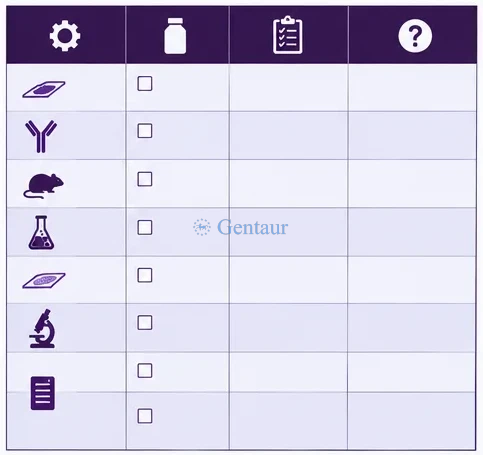
Begin by recording what the work is intended to show. The observation might concern target localization, relative signal distribution, a comparison between conditions, co-localization planning, or the presence of a marker in a defined sample type. These objectives are not interchangeable. Each can impose different questions about sample preparation, target accessibility, detection approach, observation method, and controls.
Next, separate decisions from claims. A decision is something the researcher must choose or investigate, such as whether a preparation step could alter target accessibility. A claim is a statement about a particular product or workflow, such as an application, host, format, conjugation, or documented validation statement. The first can be planned from scientific context; the second must be supported by the relevant record or documentation.
Planning decision
Identify the target, sample, intended observation, preparation history, detection architecture, controls, and practical constraints.
Product question
Check whether the record actually states the target identity, format, host, application, conjugation, species, or other field needed for the decision.
A useful starting record has five lines: target or analyte; sample type and treatment; intended readout; candidate primary reagent record; and the most important unresolved compatibility question. This keeps the search focused without implying that a catalogue match is a complete workflow recommendation.
Use a question-first workflow
Before opening multiple records, write a short question statement. Include the target terminology used by the project, the sample context that is already known, the intended observation, and the decision that remains open. For example, the question may be whether a documented primary reagent record contains enough information to justify further review for a particular prepared sample and detection design. That wording is more useful than a broad request for “the best antibody,” because it identifies the evidence that is missing.
Also define what would change the decision. A missing host field, an unclear target form, an undocumented preparation context, or an unresolved detection relationship may each require a different follow-up. Listing those decision points early prevents the search from becoming a collection of product names without a traceable reason for including them.
Define sample context and target identity
Sample context is more than a species or tissue label. It includes the material’s origin, processing history, preservation or fixation context where relevant, section or preparation format, and any treatment that may affect the target or background environment. Record only what is known. If a field is unknown, mark it as unknown rather than filling the gap with an assumption.
Describe the intended observation
State whether the workflow is intended to support localization, comparative observation, co-localization planning, or another defined purpose. Avoid treating an application label as proof that a reagent will answer the question in the exact sample context. An application field is a record attribute to review; the researcher still needs to assess whether the cited context resembles the planned work.
The intended observation also determines what information should be preserved in the planning record. A localization question may require a clear description of spatial context. A comparison may require consistent handling and a stated comparison basis. A multi-target design may require a separate record for each target and a note about how their detection routes will be reviewed together. These are planning requirements, not claims about a product’s outcome.
Resolve target ambiguity early
Target names can refer to a protein family, isoform, processed form, complex, species-specific ortholog, or a broader marker description. Capture the target identifier or terminology used by the project, then compare it with the identity language in the record. If the relationship is uncertain, create a question for documentation review. Do not infer specificity from a familiar name alone.
For multi-target designs, make a separate row for each target and add an interaction note. The interaction note is not a claim that the reagents are compatible. It simply flags questions about host species, detection routes, signal separation, target accessibility, or sample context that may need to be reviewed together.
Record known, unknown, and consequential fields
Not every unknown has the same importance. A missing field matters when it could change the workflow decision. A missing target-form distinction may affect whether the record is worth further review. An absent packaging detail may affect procurement planning without answering a scientific question. Classify unknowns by consequence so that technical review focuses on the information most likely to change the plan.
A practical sample-context record can include: sample origin; species or model; preparation state; preservation or fixation information where relevant; section, surface, or suspension format; treatment history; target form under consideration; intended observation; and known constraints. If a field is not applicable, mark it accordingly rather than leaving the reader to interpret silence.
Map preparation without prescribing a universal protocol
Preparation is often upstream of the reagent choice. Fixation, embedding, permeabilization, retrieval, blocking, washes, and other treatment-sensitive decisions may influence what is accessible for recognition and how background is managed. The correct planning approach is to map these as variables and identify which ones require documentation or laboratory validation.
Build a preparation inventory
Record the preparation state that is already fixed, the steps that remain undecided, and the reason each step matters to the observation. For example, a researcher might note that a preserved sample will be examined in a sectioned format and that target accessibility after preparation must be reviewed. That is a compatibility question, not a conclusion about whether a given reagent will work.
Keep procedural details separate from catalogue facts. A supplier record may state an application or provide a suggested use context, but this article does not convert those fields into concentrations, incubation times, retrieval conditions, or other protocol parameters. Those details require the appropriate product documentation and, where necessary, laboratory-specific evaluation.
Identify treatment-sensitive points
- Target accessibility: Could the preparation state change exposure of the region being recognized? Verify through relevant documentation or validation planning.
- Sample morphology: Could the intended observation depend on preserving a structural relationship? Define what must remain interpretable rather than assuming a preparation step is neutral.
- Background environment: Could endogenous components, sample composition, or handling history affect interpretation? Identify controls and review requirements.
- Detection architecture: Could preparation choices constrain the later detection chemistry? Record this as a dependency to confirm.
- Comparison structure: If conditions will be compared, which preparation factors must be kept equivalent or documented separately?
Separate fixed factors from open choices
Some workflows begin with samples that have already been prepared. In that situation, the preparation history is not an adjustable variable, but it remains an important evidence field. The question becomes whether the available reagent documentation addresses a comparable context and which limitations must be acknowledged.
Other workflows are still being designed. Here, the planning record should distinguish choices that are constrained by the sample from choices that remain open for review. Avoid describing an open choice as a recommendation merely because it is familiar. The purpose of the map is to expose dependencies before they become hidden assumptions.
The output of this stage should be a preparation summary, not a protocol. It should tell a reviewer what is known, what is variable, and where a product record or technical document must be consulted.
Review the primary reagent record systematically
A primary reagent record should be read as structured evidence with limits, not as a substitute for experimental design. Start with identity and then move through the fields that bear directly on the planned workflow. A useful review captures both present information and missing information.
Fields to inspect
- Target identity: Compare the record’s target wording with the project’s target definition. Note aliases or unresolved distinctions rather than silently treating them as equivalent.
- Host and format: Record the stated host, clonality or other available format fields, and any conjugation or preparation information shown. These fields inform later planning; they do not automatically establish detection compatibility.
- Stated applications: Identify whether immunostaining or a related application is explicitly listed. Check the context and limitations of the statement instead of extending it to a different sample or readout.
- Species or sample context: Capture any stated species, tissue, cell, preparation, or research context. Treat a missing field as unresolved.
- Documentation: Note whether datasheets, technical notes, validation summaries, or other supporting documents are available. The existence of a document is not the same as support for the specific planned use.
- Variant and pack information: Separate size, format, and packaging from scientific suitability. A larger or smaller presentation is not an interchangeable scientific alternative.
For a practical record-reading method, see Reading Antibody Product Records: A Practical Guide. Use that guide to organize questions, not to infer claims beyond the visible record.
Explicitly stated in the product record or supplied documentation.
Relevant information that is absent from the material reviewed.
A question requiring additional documentation, technical review, or laboratory assessment.
Read fields together, not in isolation
A field can be accurate and still be insufficient for the workflow question. A stated target does not answer whether the recognized form is the one of interest. A stated application does not answer whether the sample preparation is comparable. A host field does not by itself identify a complete detection route. The review should therefore include a short interpretation note for each consequential field.
For example, the record may show a target name and an immunostaining application. The planning note could say: “Target wording appears related to the project definition; exact target form and sample context require confirmation.” That wording preserves the useful information while avoiding an unsupported conclusion.
Plan detection chemistry as a dependency
Detection is not an isolated add-on. It connects the primary reagent’s format and host information with the intended observation, available detection reagents, sample context, and readout. The planning task is to describe that connection and identify what must be checked.
Start with the detection architecture
Write down whether the planned design depends on a directly labeled primary reagent, a secondary reagent, or another documented detection arrangement. Do not assume that two records can be combined simply because they address related targets or because their names appear in the same category. Review host, species recognition, conjugation, signal modality, and any stated compatibility information together.
For multiplex or multi-target work, add a compatibility matrix. List each primary reagent, its stated host or format, the proposed detection route, and the unresolved question. The matrix is a planning tool. It does not prove that signals will be distinguishable or that the combined design will produce an interpretable result.
Separate chemistry from observation
Detection chemistry describes how a bound reagent might be made observable under a documented design. Observation describes what the researcher intends to interpret. The same detection architecture can raise different questions depending on sample structure, target abundance, background, imaging system, or comparison design. Avoid collapsing these layers into a promise of sensitivity, specificity, or signal quality.
Also record where the detection route depends on information that is not shown. If a primary record does not state a conjugation, recognition relationship, or relevant application context, mark that field as unresolved. Do not substitute a category label for the missing information.
Design controls as questions about interpretation
Controls help separate target-related interpretation from effects introduced by preparation, detection chemistry, handling, or the observation system. They should be planned in relation to the specific question and sample context. A control label alone does not guarantee that it will answer the intended question.
Map control purpose
- Reference or positive context: What material or condition is expected to provide a meaningful comparison, and what evidence supports that expectation?
- Primary-reagent omission or alternative negative design: Which part of the workflow is being tested when the primary reagent is omitted or otherwise controlled?
- Detection-only control: Could the detection system contribute to the observed background? What part of the design isolates that possibility?
- Process control: Which preparation or handling step needs an independent check?
- Comparison control: If two conditions are compared, what must remain consistent for the comparison to be interpretable?
Use control planning to expose missing information. If a control depends on a known target context, a matched sample, a documented reagent relationship, or a defined detection route, record that dependency. Do not call a material a validated positive or negative control unless the relevant evidence supports that description.
Connect controls to competing explanations
Scientific control design is about more than adding a nominal control to a layout. It asks which alternative explanation a control can help examine. A difference between samples may reflect target distribution, preparation differences, background, detection behavior, or observation conditions. A structured control plan cannot eliminate every uncertainty, but it makes the uncertainty visible and reviewable.
For each proposed control, write three short statements: the interpretation it is intended to examine, the part of the workflow it shares with the main condition, and the limitation that remains. This makes it easier to see whether the control addresses target recognition, detection background, preparation effects, or comparison consistency.
Assess buffers, washes, and accessories as workflow components
Supporting materials can influence how a workflow is assembled, but their presence in a catalogue does not establish that they are required or suitable for a particular design. Treat buffers, wash solutions, blocking materials, detection reagents, plates, tubes, and filtration or handling accessories as separate records with separate evidence boundaries.
For each supporting item, ask four questions: What role is intended? Which stage depends on it? What field in the record describes its composition, format, or stated use? What remains unknown about interaction with the selected sample and primary or detection reagents?
Size and packaging decisions belong in the operational plan, while scientific suitability belongs in the compatibility review. A convenient format may reduce handling complexity, but it should not be presented as improving reproducibility or performance unless that claim is documented. Likewise, a buffer category can help locate relevant records, but category membership does not establish interchangeability.
For broader plate-based planning, see Selecting Buffers and Accessories for Plate-Based Assays. Its planning logic can help organize support materials while keeping product-specific conclusions tied to the records under review.
Assign each support material a role
Use role language that is specific enough to support review but does not overstate the record. “Candidate wash material for review” is more precise than “required wash.” “Possible vessel for the planned format” is more defensible than “compatible plate” when the relevant compatibility information has not been documented.
For accessories, record operational fields such as material, geometry, format, capacity, or package information when those fields are available and relevant. Keep these details separate from the scientific question. An accessory can fit a handling plan without establishing that it is appropriate for the sample or detection design.
Review documentation, variants, and record limits
Documentation review is the bridge between a catalogue record and a workflow question, but it is not a shortcut around laboratory-specific evaluation. Build a document trail that shows which source supports each statement and which questions remain open.
Use a documentation hierarchy
Begin with the exact record under consideration. Capture the fields that are visible there, including target wording, format, host, application, conjugation, sample context, and available pack information where shown. Then inspect linked technical documents or application notes if they are supplied for that record. Keep the source of each statement clear.
Do not use unrelated literature metadata to create product validation or protocol claims. A publication title may be useful for contextual reading, but it does not establish that a catalogue record was used in the described work, that the products are equivalent, or that the reported conditions transfer to a new workflow.
Compare variants carefully
Variants may differ in format, conjugation, host, preparation, package size, or other record fields. Do not describe one variant as interchangeable with another without explicit support. A shared target name is not enough. A shared category is not enough. A similar product title is not enough.
Create one row per canonical record when variant differences could affect the workflow. In the row, separate scientific fields from purchasing fields. This prevents a larger pack, different presentation, or alternate format from being mistaken for a scientific substitute.
Make missing documentation visible
When documentation is incomplete, record the absence precisely. “Not shown in the reviewed record” is different from “not available anywhere,” and both differ from “not applicable.” This vocabulary keeps the planning document honest and gives a technical reviewer a clear starting point.
Use an evidence table to keep decisions traceable
The table below is designed for planning and review. “Record field to inspect” identifies where information may be found; it does not imply that the field will be populated or that the information will answer the entire question.
| Reagent role or stage | Decision question | Record field to inspect | Evidence boundary |
|---|---|---|---|
| Sample preparation | What preparation state and treatment history must be represented? | Application context, sample or preparation notes, technical documentation | Documented context may guide review; it does not establish suitability for an untested preparation. |
| Target definition | Does the record’s target identity match the project’s intended target? | Target name, aliases, species or isoform information where shown | Name similarity is not proof of identity, specificity, or recognition of the intended form. |
| Primary reagent | Which host, format, application, and documentation fields affect the plan? | Host, clonality or format, conjugation, stated applications, documents | Listed fields describe the record; they do not guarantee performance in the planned sample. |
| Detection | What detection route is being considered, and which compatibility questions follow? | Conjugation, host recognition, detection modality, stated use context | Compatibility must be checked across the complete design; do not infer it from category or name. |
| Controls | Which competing explanation is each control intended to examine? | Control or validation documentation where available | A control label does not guarantee that the control answers the planned interpretive question. |
| Wash or buffer | What role does the support material play, and what interaction needs review? | Composition or formulation fields, stated use, format and size | Availability or shared category does not establish necessity, equivalence, or interchangeability. |
| Accessory | Does the vessel, plate, tube, or handling item fit the planned workflow? | Material, geometry, format, compatibility notes, size | Operational fit is distinct from scientific validation or improved outcome. |
| Observation and records | What will be recorded, compared, and escalated for review? | Readout requirements, project records, documentation links | A catalogue record cannot establish the meaning of an observation in a specific experiment. |
Use the table as a live planning document rather than a one-time checklist. Add a status to each row: documented, not shown, confirm, or not applicable. If a decision changes, record which upstream field caused the change. This creates a basic audit trail without implying that the table itself validates the workflow.
Build a dependency map before final selection
Dependencies show where an upstream decision creates a downstream question. They are planning relationships, not proven compatibility relationships. The sequence below can be used to review the workflow from context through observation.
At every node, use three labels: documented, not shown, and confirm. This simple vocabulary prevents a missing field from becoming an implied positive claim. It also gives a technical reviewer a concise route from the research question to the exact unresolved issue.
Trace downstream questions back upstream
When a detection question appears difficult, return to the primary record and sample context rather than treating detection as an isolated purchasing decision. When a control is unclear, return to the intended observation and competing explanations. When a buffer or accessory appears necessary, return to the workflow stage and ask whether that necessity is documented or merely assumed.
This reverse-check is useful because many workflow problems are dependency problems. A later-stage decision can be limited by an earlier field that was never recorded. Making the dependency explicit does not solve the question, but it prevents the uncertainty from being hidden inside a product selection.
Generic use case: recording dependencies without overclaiming
Imagine a researcher planning an immunostaining workflow to compare the distribution of a defined target across two sample conditions. The researcher has a candidate primary reagent record, but has not yet finalized preparation or detection details. Instead of writing “this reagent is compatible,” the planning sheet could read as follows:
Compare the observed distribution of the defined target between two documented sample conditions.
Sample origin and intended observation are recorded; preparation details are partly fixed and partly unresolved.
Target identity, host, format, and stated application fields are copied exactly as shown. Missing fields are marked “not shown.”
The proposed detection route depends on the primary reagent’s format and host information. The relationship is labeled “confirm,” not “compatible.”
Which control distinguishes target-related interpretation from detection or preparation background in this sample context?
Potential wash or buffer records are listed by role and documentation field. No item is called interchangeable with another.
The researcher defines what will be recorded and compared without describing a predicted staining pattern or outcome.
The unresolved questions are assembled into an inquiry brief before procurement or protocol finalization.
This record is useful even before every answer is available. It shows where the plan is supported, where it is silent, and what a technical discussion should address. It also prevents a catalogue search result from being mistaken for a validated workflow.
What this example deliberately does not say
It does not assign a concentration, incubation time, retrieval condition, wash condition, expected signal, or performance outcome. It does not name an unsupported product or claim that two records are interchangeable. It does not convert a stated application into a guarantee for the planned sample. Those omissions are deliberate: they preserve the boundary between planning and protocol or validation.
Prepare a focused technical inquiry
A concise inquiry brief makes a workflow question easier to review. It should provide enough context to distinguish a general product question from a sample-specific compatibility question, while clearly separating known facts from assumptions.
Recommended inquiry-brief structure
- Target: State the target terminology used in the project and identify any unresolved identity or form distinction.
- Sample context: Describe the sample type, preparation state, treatment history, and intended observation at the level necessary for review.
- Intended application: State that the question concerns immunostaining or the relevant documented use context, without claiming an outcome.
- Selected record fields: Quote or summarize the target, host, format, conjugation, stated application, and documentation fields actually visible in the record.
- Planned detection approach: Describe the proposed architecture and list any host, recognition, channel, or readout constraints.
- Known constraints: Include sample availability, number of conditions, multi-target requirements, observation method, or other project limits.
- Exact unanswered questions: Ask whether the documentation addresses the specific sample context, preparation state, detection relationship, or control design under consideration.
- Requested references: Ask for the relevant technical document or record field rather than requesting an unsupported guarantee.
When a question remains unresolved, use the contact and inquiry page to route it through the available channel. Do not include unnecessary personal information, and do not treat a response as a replacement for laboratory-specific validation.
Make the question answerable
Broad questions such as “Will this work?” are difficult to interpret because they do not identify the sample, preparation, detection design, or decision threshold. Replace them with bounded questions tied to visible fields. Ask whether a document addresses a stated preparation context, whether the record specifies a relevant format or conjugation, or which information is needed to evaluate a proposed detection relationship.
Keep the inquiry factual. Quote the record where possible, identify what is not shown, and state what decision depends on the answer. This approach does not guarantee that the response will resolve the workflow, but it gives the reviewer a clear basis for addressing the actual uncertainty.
Final planning checklist
Before selecting records or finalizing a workflow discussion, confirm that the plan can answer the following:
- The research question and intended observation are explicit.
- Sample origin, preparation state, and relevant treatment history are recorded or marked unknown.
- The target definition has been compared with the identity language in each relevant record.
- Primary reagent fields are separated into documented, not shown, and confirm.
- Detection chemistry is mapped as a dependency rather than assumed to be compatible.
- Each control has a stated interpretive purpose and an identified evidence question.
- Buffers, washes, and accessories are assessed by workflow role and record fields, not by category name alone.
- Variants and pack sizes are kept separate from scientific suitability.
- Documentation sources are tied to the claims they actually support.
- Unresolved questions are assembled into a concise inquiry brief.
- No product, protocol, outcome, or interchangeability claim exceeds the available documentation.
Conclusion
A sound immunostaining reagent plan is an evidence map: it connects the research question to sample context, target definition, preparation, primary reagent, detection chemistry, controls, support materials, documentation, and observation. The map is valuable because it makes dependencies visible without pretending that a catalogue record can answer every laboratory-specific question.
Use product records to identify what is documented. Use technical documentation to investigate what remains unclear. Use controls and laboratory review to evaluate the complete workflow. Keeping those roles distinct supports clearer procurement decisions, more focused technical inquiries, and a more honest account of what is known before work begins.
Planning FAQ
How should I choose a primary reagent for immunostaining?
Start with the target definition, sample context, intended observation, and preparation state. Then inspect the record for target identity, host, format, stated applications, and available documentation. Treat each field as evidence about the record, not as a guarantee of suitability. Any gap involving target form, preparation, detection, or sample context should be marked for confirmation.
How should I interpret an application field?
An application field tells you what the record states. Review the context behind the field and compare it with your sample, preparation, and intended readout. Do not extend a general application label into a claim about a different sample or expected result.
What controls should be planned?
Plan controls around competing explanations: target-related interpretation, detection background, preparation effects, and comparison consistency. The appropriate control depends on the question and sample context. A control name alone does not prove that it will answer the intended question.
How do I select buffers or accessories?
Define the role of each item, the stage that depends on it, and the record fields needed for review. Check formulation, material, format, size, stated use, and any documented constraints. Do not infer necessity, performance, or interchangeability from category membership.
What if the documentation is incomplete?
Mark the field “not shown,” identify why it matters, and convert it into a specific confirmation question. A missing field is not evidence for or against suitability. A focused inquiry should include the target, sample context, intended application, selected record fields, detection approach, constraints, and exact unanswered questions.
Can two similar variants be treated as interchangeable?
Not without explicit support. Similar names, targets, formats, or categories do not establish interchangeability. Compare the exact records and documentation, and keep any unresolved relationship labeled “confirm.”
Does a listed immunostaining application establish compatibility?
No. It identifies an application statement associated with the record. Review the sample context, preparation state, target definition, detection design, and supporting documentation before deciding whether the record merits further evaluation for the planned workflow.
What should be recorded when a sample is already prepared?
Record the preparation history as a fixed context, including the information that is known and any missing fields. Then compare that context with the documentation under review. Do not assume that a previously prepared sample is covered by a general application statement.
Planning view
Trace the decisions before comparing reagent records
This map connects the questions that shape an immunostaining workflow. Each connector represents a planning dependency: an upstream choice may change what must be checked later. It is not evidence of compatibility, interchangeability, performance, or a validated protocol.
How to read the map
- Context — define what the sample and observation require.
- Record review — inspect fields stated in the catalogue or technical documentation.
- Follow-up — identify an unresolved question before proceeding.
Evidence boundary: a catalogue field can describe what is documented in that record. It does not, by itself, establish that every element of a proposed workflow is compatible.
-
01
Starting context
Sample context
Record the sample type, preservation or preparation history as known, target location of interest, and intended observation or readout.
Evidence needed: project notes and the application context; do not infer sample suitability from a product title. -
02
Preparation dependency
Sample preparation
List preparation, treatment, retrieval, permeabilization, blocking, or other planned steps as questions to review rather than as a universal procedure.
Evidence needed: documented application scope and any preparation-specific notes. Confirm details that are absent. -
03
Primary recognition dependency
Primary reagent
Define the target identity and inspect the primary reagent record for host, format, stated application fields, target description, and available documentation.
Evidence needed: the actual record fields and technical documents. A stated application is not a guarantee for a particular sample or preparation. -
04
Signal-generation dependency
Detection approach
Map the intended detection chemistry or readout to the primary reagent’s documented format and to the requirements of any secondary or accessory role under consideration.
Evidence needed: documented format, detection-related fields, and relevant technical guidance. Do not infer a complete detection chain from one record. -
05
Interpretation dependency
Controls
Plan which positive, negative, background, process, or omission controls would help distinguish target-related interpretation from preparation, detection, or handling effects.
Evidence needed: the research question, known sample context, and the control rationale. Controls support interpretation planning; they do not prove an outcome in advance. -
06
Handling dependency
Wash or buffer needs
Identify where wash, blocking, dilution, storage, or other support materials enter the planned workflow, then check whether their role and specifications are documented for the intended use.
Evidence needed: product or category documentation, stated formulation or use information when available, and the full workflow context. -
07
Observation dependency
Readout or observation
Define what will be observed, recorded, or compared and which upstream decisions could affect interpretation. Keep the observation plan separate from any claim about expected staining or signal.
Evidence needed: the intended readout, instrument or observation context where relevant, and documented limitations. Verify unresolved dependencies before drawing conclusions.
Before selection
Turn each connector into a review question
- Upstream: What sample and preparation assumptions are already fixed?
- Record: Which fields are explicitly documented, and which are not shown?
- Downstream: What detection, control, support-material, or observation question depends on that field?
- Escalation: Which unresolved question should be included in a technical inquiry or documentation review?
Stage-by-stage planning reference
Turn an immunostaining workflow into questions you can document
This table is a planning aid, not a universal protocol. Use it to record what is documented in a catalogue record or technical document, separate confirmed information from open questions, and identify where application-specific review is still required. “Documented” means the relevant information is explicitly available in the record or supporting documentation; “not shown” means it should not be inferred from an absent field.
| Stage | Planning objective | Catalogue or documentation field to inspect | Unresolved compatibility question | Safe evidence boundary |
|---|---|---|---|---|
| 01 Sample preparation | Describe the specimen context and the preparation history that may affect target accessibility, morphology or background interpretation. | Sample type, species or source where supplied; preparation or fixation information; stated application context; target and epitope notes when documented. | Does the selected record explicitly address the planned sample context? Are preparation-dependent assumptions left unanswered? | Documented: only the sample or preparation information stated in the record. Not shown: suitability for an unlisted specimen or preparation. Confirm: application-specific fit before use. |
| 02 Primary reagent | Define the target identity and choose a primary-reagent record whose stated details can be compared with the intended observation. | Target name or identifier; host; clonality or reagent type if supplied; format; stated applications; species or tissue information; product documentation and revision date where available. | Is the target identity unambiguous for this project? Does the record state the intended application and relevant sample context, or would that require documentation review? | Documented: catalogue fields and applications explicitly listed. Not shown: performance in an unlisted context or equivalence to another record. Confirm: target, format and application fit. |
| 03 Detection | Map how the primary-reagent signal is intended to become observable, without treating a detection label as proof of a complete workflow. | Stated detection method; secondary-reagent requirements if listed; conjugate or label information; species and host constraints; readout or imaging context when documented. | Does the planned detection approach recognize the selected primary reagent and fit the intended observation method? Are secondary or conjugate dependencies explicitly described? | Documented: only the detection relationships stated in the supporting material. Not shown: compatibility merely because two records use similar labels. Confirm: detection chemistry, species relationships and readout requirements. |
| 04 Controls | List the control questions needed to distinguish target-related signal, background, preparation effects and process errors. | Control guidance in the technical documentation; stated positive or negative control material; target or species information; any application notes that define the scope of control use. | What comparison would reveal nonspecific signal or a process-dependent effect in this particular sample context? Are control materials and their intended role documented? | Documented: controls explicitly recommended or described. Not shown: that a control proves specificity, sensitivity or successful staining. Confirm: control design with the laboratory’s scientific and application requirements. |
| 05 Washing or buffer steps | Record the supporting materials and handling assumptions that belong to the complete workflow rather than selecting them in isolation. | Buffer or wash category; stated composition or intended role when supplied; compatibility notes; required format or size; vessel and handling information where documented. | Is the support material specified for the planned workflow, or is its role being inferred from a broad category name? Do vessel, sample and detection requirements introduce additional constraints? | Documented: the stated role, specifications and available variants. Not shown: guaranteed compatibility or interchangeability with another buffer or accessory. Confirm: workflow fit, handling requirements and any local preparation assumptions. |
| 06 Observation | Define what will be observed, recorded and compared so that the readout is not confused with an unsupported performance claim. | Intended observation method; label or signal description; imaging or viewing context when documented; record fields for sample, target, reagent version and controls. | Does the planned observation method match the documented signal and sample context? Which observations are descriptive, and which would require a separate validation plan? | Documented: the stated readout or label information. Not shown: signal quality, specificity, sensitivity or an expected image. Confirm: observation criteria and interpretation rules before drawing conclusions. |
| 07 Recordkeeping | Create an auditable record of decisions, unresolved questions, source documents and any changes made during workflow review. | Canonical product or category record; version or lot field when available; date accessed; application and sample notes; control plan; documentation links; inquiry responses. | Can another researcher reconstruct which record and documentation informed the decision? Which missing fields must be resolved before the workflow is finalized? | Documented: information captured from identified records and documents. Not shown: that a complete-looking worksheet establishes validation. Confirm: unresolved items through appropriate technical review and laboratory assessment. |
Use the table as a decision log
For each row, record the exact field you reviewed, write not shown when the source is silent, and convert important gaps into a specific confirm question. This preserves the distinction between a catalogue description and a claim about a complete immunostaining workflow.
Responsible escalation
Turn an unresolved workflow question into a useful inquiry
When a reagent record does not answer an application-specific question, a concise technical brief gives the next reviewer the context needed to assess what can be confirmed, what documentation is missing, and which points require laboratory review.
Prepare an inquiryInclude these fields
- 01Target
State the target identity as you understand it, including any relevant synonym, isoform, species, modification, or subcellular context. Separate confirmed target information from assumptions that still need review.
- 02Sample context
Describe the sample type and preparation context at the level necessary to frame the question. Note whether the material is fixed, embedded, cultured, tissue-derived, or otherwise treated, without assuming that a record covers every preparation.
- 03Intended application
Name the planned use—such as immunostaining, imaging, characterization, or another research application—and distinguish the intended observation from any expected result. The application label is a starting point for review, not proof of suitability.
- 04Selected record fields
Copy the relevant catalogue fields exactly as displayed: target, host or format when listed, stated applications, reactivity or species information when provided, formulation, size or variant, and linked documentation. Flag fields that are absent rather than filling gaps with inference.
- 05Planned detection approach
Describe the intended detection chemistry or readout in general terms, including any known primary-to-detection dependencies. Ask for compatibility confirmation where the record does not explicitly address the combination. Do not present an unverified pairing as interchangeable.
- 06Known constraints
List material limits, instrument or imaging constraints, available controls, sample timing considerations, and any format or volume requirements that affect planning. These constraints help narrow the question without turning the inquiry into a universal protocol.
- 07Exact unanswered questions
Use specific, answerable prompts. For example: “Which documentation addresses this sample-preparation context?” or “Is the stated application information intended to cover this detection configuration?” Avoid broad requests for a guaranteed outcome.
Keep the boundary clear
This brief is a planning aid. It does not guarantee a response, compatibility, staining outcome, assay performance, or any other experimental result.
- Documented: information explicitly present in the product record or supplied technical documentation.
- Not shown: an important field or relationship that the available record does not address.
- Confirm: an application-specific question requiring documentation review or laboratory validation.
A strong inquiry preserves this distinction. It asks for clarification instead of converting a catalogue field into a protocol or performance claim.
Compact example
A traceable question set
Context: A researcher is planning an immunostaining workflow and has identified a primary reagent record. The target and stated application are recorded, but the available information does not resolve the relationship between the planned sample preparation and detection configuration.
Recorded: target identity, displayed application fields, reagent format, sample context, intended readout, and the controls the researcher plans to include.
Unresolved: whether the documentation addresses the complete combination of sample context, primary reagent, detection approach, and supporting materials.
Inquiry: “Which technical documentation should be reviewed for this combination, and which aspects remain application-specific and require laboratory validation?”
Immunostaining Workflow Planning FAQ
Workflow planning reference
Questions to resolve before selecting immunostaining reagents
This FAQ helps researchers interpret reagent records, identify dependencies and prepare focused documentation questions. It is a planning aid—not a universal protocol, performance guarantee or substitute for application-specific review and laboratory validation.
How should I choose a primary reagent for an immunostaining workflow?
Start with the biological question and sample context, then review the record for the target identity, host, format, stated applications and any available supporting documentation. Treat each field as a selection input, not as proof that the reagent is suitable for your exact sample or workflow.
Record what is documented, what is absent and what requires confirmation. Important questions may include whether the target form is relevant to the sample, whether the intended observation method is represented in the stated applications, and whether the planned preparation could affect target accessibility. Review the antibodies and immunostaining category for relevant records, then verify application-specific details before proceeding.
What do application fields in an antibody record actually tell me?
Application fields describe the uses represented in the catalogue record. They can help you narrow a search and identify which documentation to review, but they do not establish compatibility with every sample type, preparation method, detection system or observation platform.
Read the application field alongside target information, host and format details, species or sample context when supplied, and any linked technical documentation. If a field does not address your intended use, mark that point as unresolved rather than inferring suitability from a nearby application or from a similar-looking record.
How should I plan controls without prescribing a universal protocol?
Define the question each control is meant to answer. Depending on the workflow, planning may involve a positive-reference question, a negative or omission control, a background assessment, and process checks that distinguish sample-preparation effects from detection-system effects.
Document the control purpose, the material or condition to be reviewed, the expected interpretation and the decision it will support. The record should show which controls are documented and which are your laboratory’s design choices. Do not assume that a control establishes specificity, sensitivity or successful staining unless appropriate evidence and validation support that conclusion.
How do I select supporting buffers, wash materials or accessories?
Map each supporting item to a defined workflow role: preparation, blocking, washing, detection, containment or observation. Then inspect the record for composition or role descriptions, available formats, vessel requirements, handling information and documented compatibility statements, where provided.
A buffer or accessory should not be treated as interchangeable with another item merely because the catalogue category or intended role appears similar. Compare the actual record fields and documentation, and identify any missing information for technical review. You can browse buffers and wash solutions or workflow accessories as starting points without assuming that any listed item is suitable for a particular protocol.
What should I do when documentation is missing or incomplete?
Separate documented facts from open questions. Create a short record containing the target, sample context, intended application, planned detection approach, relevant record fields, known constraints and the exact compatibility question. Note whether the uncertainty concerns sample preparation, target accessibility, detection chemistry, controls, supporting materials or readout.
Do not fill gaps with assumptions based on product names, neighboring catalogue records or general laboratory practice. A focused inquiry can be submitted through the contact page. The inquiry is a request for clarification, not a guarantee of a response, compatibility or experimental outcome.
How should I compare variants of a related reagent record?
Compare variants field by field rather than treating them as interchangeable. Check target identity, host, format, size, concentration or other stated specifications, application information, storage or handling notes when supplied, and the exact documentation attached to each variant.
Keep variant-level differences visible in your planning record. A difference in format, size or stated use may change the questions you need to resolve, but it does not by itself establish better performance or suitability. If the catalogue does not explain the distinction, list it as an unresolved question for documentation review.
Which compatibility questions are application-specific?
Questions involving sample preparation, fixation or treatment, target accessibility, blocking conditions, detection chemistry, species or matrix context, background, vessel format and observation method are generally application-specific. Their answers depend on the complete workflow rather than on one catalogue field.
Use the product record to identify what is stated, then review supporting documentation and laboratory requirements for the remaining decisions. A category label or a related application should guide investigation, not substitute for a compatibility assessment.
What information should I include in a technical inquiry?
Include the target and intended observation, sample context, preparation or treatment constraints, intended application, selected record fields, planned detection approach, known workflow dependencies and the precise unanswered questions. If comparing variants, identify the fields that differ and explain why the distinction matters to your workflow.
Keep the brief factual and bounded: distinguish documented information from assumptions, and ask for clarification rather than requesting confirmation of an outcome. The contact page provides the appropriate route for an inquiry.