How to Compare ELISA Kits for Research Workflows
A research-use guide to comparing ELISA kit records by analyte, matrix, assay format, controls, documentation and workflow fit without inferring validation or performance.
How to Compare ELISA Kits for Research Workflows
Research-use comparison guide
How to Compare ELISA Kits for Research Workflows
Compare assay records by research question, analyte, sample matrix, format, controls, workflow requirements and documentation—while keeping unresolved details visible for technical review.
Deliver the complete long-form comparison framework.
This article summarizes Give readers a stepwise method for comparing assay records and planning a defensible short using the available catalog and source context. It is written for readers who need a careful review path without unsupported performance, protocol or interchangeability claims.
Start with documented catalog identity
Available source evidence is retained for context, with unsupported claims avoided. The safest review begins with names, identifiers, supplier records and category relationships that are present in the source material, then separates those facts from any interpretation.

Compare scope before drawing conclusions
The main article should be the information-dense center of the page, with tables breaking Readers should compare species labels, target names, catalog numbers and available documentation as separate signals, because similar labels do not prove that two catalog entries are equivalent.
Keep the review record reproducible
A useful selection record notes which catalog fields were checked, which source pages supported them and which questions still require supplier documentation. This keeps the public article informative while avoiding claims that the available evidence does not support.
Shortlist review tool
Turn catalogue records into explicit follow-up questions
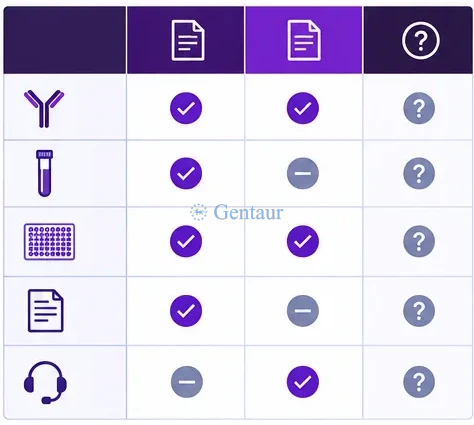
Use this matrix after reviewing an ELISA or biomarker assay record. A field marked documented is visible in the record being reviewed; not shown means the field is absent or unclear; verify identifies information that should be confirmed in the applicable technical documentation before a workflow decision is made. These labels describe record completeness, not assay quality or expected performance.
| Comparison area | Evidence visible in a record | Question to verify | Decision status |
|---|---|---|---|
| Analyte identity | Target name, identifier, species or analyte description is stated. | Does the stated identity match the research question, naming convention and intended measurement? | Documented when the identity is explicit; otherwise verify. |
| Sample matrix | Permitted or described sample types are listed, if supplied. | Is the intended matrix addressed, and are collection, preparation, dilution or interference considerations documented? | Not shown if the matrix is absent; verify if the matrix is listed but preparation limits are unclear. |
| Stated format | Assay architecture or format is identified in the record or supporting documentation. | What does the stated format require in terms of sample handling, binding, washing and detection steps? | Documented only when the format is explicit; otherwise verify. |
| Controls or standards | Standards, calibrators, positive or negative controls, and their inclusion are described, if available. | Which materials are supplied, which must be sourced separately, and how are they intended to be used in the planned run? | Not shown when the record does not identify them; verify before treating the set as complete. |
| Protocol detail | Protocol, handling notes, incubation guidance or preparation instructions are accessible. | Are the steps sufficiently detailed for the planned equipment, staffing, sample volume and documentation process? | Documented when usable instructions are available; otherwise verify. |
| Detection and readout information | Detection chemistry, signal type, required equipment or readout approach is stated, if supplied. | Is the planned reader or detection workflow compatible with the documented readout requirements? | Not shown when the readout is absent; verify when equipment compatibility is unresolved. |
| Pack or variant data | Pack size, configuration, version, species, or other selectable variant fields are displayed. | Does the selected configuration provide the materials and quantity needed for the planned comparison, including repeats and controls? | Documented when the selected variant is clear; otherwise verify. |
| Support needs | Technical documents, related resources or a defined inquiry route are available. | Which unresolved questions require technical review before purchase, sample preparation or run planning? | Verify whenever a material workflow or application decision depends on missing information. |
A documented catalogue field can support comparison, but it does not by itself establish validation, sensitivity, specificity, clinical use or suitability for a particular sample. Record the source and version of each document reviewed, then retain unresolved questions with the shortlist.
Workflow planning
Connect the record to the run—without filling gaps with assumptions
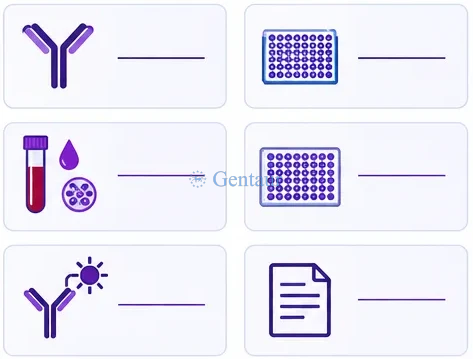
Use this sequence to turn a catalogue review into a documented research-workflow plan. The stages connect the research question, sample decisions, materials, execution notes and readout while keeping application-specific uncertainties visible.
- 01
Define the question
State what the assay is expected to inform
Planning prompt: What analyte or biomarker is being considered, in which research context, and what readout will be recorded?
Boundary: A product title or category label does not establish that the assay answers a particular biological question or is suitable for a specific study.
- 02
Review the record
Separate visible fields from questions for review
Planning prompt: Record the stated analyte identity, assay format, detection approach, sample information, supplied components and available documentation. Mark every field that is not shown.
Boundary: Catalogue metadata supports comparison; it does not by itself establish validation, sensitivity, specificity, clinical use or suitability for a particular sample.
- 03
Plan samples and controls
Map samples, standards and controls before execution
Planning prompt: Which sample groups, standards, calibrators, blanks and controls will be tracked, and what identifiers will connect them to plate positions and records?
Boundary: The presence or mention of controls in a record does not demonstrate their behavior in a planned experiment or replace review of the applicable documentation.
- 04
Check materials
Confirm the complete material plan
Planning prompt: Before scheduling the run, check the selected variant or pack, plate or vessel needs, sample-preparation materials, wash materials and detection materials against the intended workflow.
Boundary: A catalogue record may not show every compatibility condition, required accessory or preparation constraint. Do not infer that an unlisted material is included or interchangeable.
- 05
Document run conditions
Make preparation and assay stages traceable
Planning prompt: Create a run record for sample preparation, wash steps, incubation stages, detection steps, plate layout, timing, handling notes and any deviations from the reviewed documentation.
Boundary: Mention of wash, incubation or detection stages here is workflow planning language, not a protocol. Use the applicable product documentation for the actual conditions and sequence.
- 06
Record the readout and follow-up
Capture what was observed and what remains unresolved
Planning prompt: Record the plate-reading setup, output fields, sample identifiers, control observations and any questions that must be resolved before interpreting or repeating the workflow.
Boundary: A planned plate readout or a catalogue-specified detection method does not establish assay performance, result meaning or biological validity without appropriate study-specific review.
Use the sequence as a handoff document
Keep the record review, material check and run notes together. When a field is missing, label it verify rather than replacing it with a presumed value. This makes the shortlist auditable and gives technical reviewers a focused set of follow-up questions.
ELISA Kit Comparison FAQ
Practical comparison questions
Frequently asked questions about comparing ELISA records
Use catalogue fields to organize a shortlist, then distinguish documented information from questions that require technical or supplier review. A product record can support comparison, but it does not by itself establish validation, sensitivity, specificity, clinical use, or suitability for a particular sample.
How should I compare ELISA kit prices?
Compare price only after normalizing the basis of comparison. Check whether the records describe the same pack configuration, number of wells or tests, included reagents, stated storage requirements, and available variants. A lower displayed price may represent a different quantity or configuration, while a higher price may reflect a larger pack or additional components; do not infer the reason unless the record documents it.
Record the visible price, currency, pack information, and date of review in your purchasing notes. If any of those fields are missing or ambiguous, mark them as verify rather than estimating a per-test cost.
What do controls and standards tell me when comparing records?
Controls, standards, calibrators, and reference materials are separate comparison fields. Note exactly which items the record says are supplied and whether their role is described. Also check whether the documentation identifies a blank, negative, positive, reference, or calibration material, without assuming that an unlisted item is absent from the complete package.
The presence of a named control does not establish assay performance or guarantee that it matches your study design. Confirm the intended use, preparation instructions, acceptance criteria, and any control requirements in the current technical documentation.
How do I evaluate matrix information?
Start by writing down the sample matrix required by your research question, such as the type of specimen or prepared sample you expect to examine. Then compare that requirement with the matrices explicitly listed in the product record or protocol. A listed matrix is a documentation point, not proof that every sample collected in that category will behave identically.
Look for sample preparation instructions, dilution guidance, exclusions, interference information, and validation context. If the record does not state whether your matrix is covered, label the field not shown and seek technical clarification rather than inferring compatibility from the analyte name alone.
How should I compare kit variants?
Compare variants as separate records or configurations when their pack size, analyte target, format, species or matrix information, detection approach, included materials, or documentation differs. Capture the exact variant name and any catalogue identifier visible in the record, then check whether the technical document applies to that specific configuration.
Do not assume that two variants are interchangeable because their titles are similar. If the relationship between variants is not documented, mark it for review and ask which differences affect procurement, preparation, controls, or the intended workflow.
What should I do when documentation is missing?
Create an unresolved-questions list instead of filling gaps with assumptions. Useful fields include analyte identity, sample matrix, assay format, detection or readout information, supplied standards and controls, sample preparation, incubation and wash instructions, storage, pack configuration, and revision date.
Keep the record status as verify until the missing information is confirmed in an applicable technical document or through a technical inquiry. Catalogue metadata can organize the review, but it cannot substitute for protocol or application documentation.
How do I submit an inquiry about an ELISA record?
Use the available contact or inquiry route and provide a concise, factual checklist: the record or product name, the intended research question, analyte, planned matrix, desired format, relevant variant or pack configuration, and the specific fields that are undocumented. Ask for the current technical documentation and clarification of any application-specific requirements.
Do not treat an inquiry response as a substitute for reviewing the supplied documentation. Save the response with the version or date of the record you evaluated, and separate confirmed information from recommendations that still require internal review.
Review the broader FAQ for additional guidance on catalogue records, inquiries, and research-use planning.